
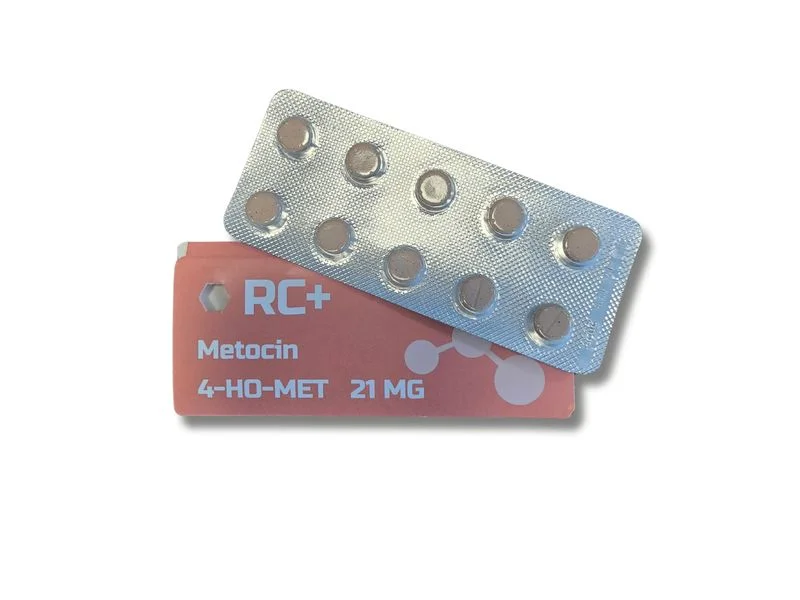
Everything to Know About Metocin (4-HO-MET) Pellets 21 mg
Metocin (4-HO-MET) is a synthetic psychedelic belonging to the tryptamine family. It is structurally related to psilocin, the primary psychoactive compound found in psilocybin mushrooms, but it is produced entirely in laboratories. It has no approved medical use and has been sold primarily as a research chemical. (Buy Metocin 4-HO-MET )
What Are 4-HO-MET 21 mg Pellets?
A 21 mg pellet is a pre-measured oral tablet containing 21 milligrams of 4-hydroxy-N-methyl-N-ethyltryptamine (Metocin).
Based on commonly referenced user-reported dosage ranges:
| Oral Dose | General Classification |
|---|---|
| 5–15 mg | Light |
| 15–25 mg | Common |
| 25–45 mg | Strong |
A 21 mg pellet falls within the common oral range, though individual sensitivity varies widely. What feels manageable for one person may feel significantly more intense for another.
History
Metocin was first synthesized by chemist Alexander Shulgin during his exploration of psychedelic tryptamines in the 1970s and later described in TiHKAL. It became more widely available on the research chemical market during the late 2000s.
Reported Effects
Users commonly describe Metocin as producing:
Bright, colorful visual distortions
Enhanced appreciation of music
Altered perception of time
Euphoria
Emotional openness
Increased introspection
Visual patterning and geometry
Enhanced colors and textures
Compared with psilocybin mushrooms, many users describe Metocin as producing particularly vivid visuals with a somewhat lighter psychological “headspace,” although this is not universal.
Duration
Typical reported timeline after oral use:
| Stage | Typical Duration |
|---|---|
| Onset | 15–40 minutes |
| Peak | 2–3 hours |
| Total Effects | 4–6 hours |
| After-effects | Up to 12 hours |
Individual experiences can vary depending on metabolism, food intake, and other factors.
Common Side Effects
Reported adverse effects include:
Nausea
Dilated pupils
Increased heart rate
Jaw tension
Anxiety
Muscle tension
Sweating
Difficulty sleeping after the experience
Some users also report an uncomfortable “body load,” particularly at higher doses.
Risks
Scientific research on 4-HO-MET remains limited. Potential risks include:
Psychological distress or panic
Accidents due to impaired perception and judgment
Hallucinogen Persisting Perception Disorder (HPPD), a rare but recognized risk with psychedelic use
Unpredictable reactions depending on individual health and environment
Because long-term human safety data are lacking, the full risk profile is not well established.
Drug Interactions
Reference sources advise particular caution with combinations involving:
MAOIs
SSRIs and other serotonergic medications
Tramadol
Stimulants
Other psychedelics
These combinations may increase the risk of serious adverse reactions or intensify effects unpredictably.
Product Quality Considerations
Research-chemical pellets may vary in:
Actual dose
Purity
Manufacturing quality
Identity of the substance
Without independent laboratory testing, it may not be possible to confirm that a pellet contains exactly what the label claims. Mislabeling has been documented in the broader research chemical market.
Legal Status
The legal status of 4-HO-MET varies by country. It is controlled or prohibited in some jurisdictions, while others regulate it under broader laws covering new psychoactive substances or analogues. Anyone researching or handling this compound should check the current laws in their own jurisdiction.
Community Experiences
Online reports frequently describe Metocin as highly visual, but they also highlight considerable variability. Some users report a relatively clear-headed experience with vivid color enhancement and geometric visuals, while others experience stronger cognitive effects, nausea, or an uncomfortable body load. This variability underscores that effects cannot be predicted reliably from dose alone.
Quick Facts
| Feature | Metocin (4-HO-MET) |
|---|---|
| Chemical Name | 4-Hydroxy-N-methyl-N-ethyltryptamine |
| Common Name | Metocin |
| Drug Class | Psychedelic tryptamine |
| Common Pellet Strength | 21 mg |
| Onset | 15–40 minutes |
| Peak | 2–3 hours |
| Total Duration | 4–6 hours |
| Medical Use | None approved |
| Research Status | Limited human data |
| Primary Concerns | Psychological effects, uncertain product quality, limited long-term safety data |
Because Metocin has not been extensively studied in humans, much of what is known comes from limited scientific literature and user reports rather than large clinical trials. That means there is substantial uncertainty regarding its long-term effects and overall safety.